what to look for in 4k gaming tv
Best gaming TVs for PS5 and Xbox Serial X (and all other consoles)
Best gaming TVs Buying Guide: Welcome to What Hello-Fi?'due south round-up of the best gaming TVs y'all tin can buy in 2022.
If you want to amp upward your favourite video game, it's worth splashing out on a bigger, brighter boob tube, and ane with deeper blacks that will immerse you in the action.
Earlier we get into our full list of the best gaming TVs, it's worth going over what makes a great gaming TV and explaining what the acronyms y'all'll see in the spec lists actually mean. That said, if y'all already know all of that stuff (or merely don't care) click here to get straight to the best gaming TVs yous can buy.
How to cull the best gaming Idiot box
Of import gaming TV features to expect out for
Broadly speaking, a TV that's dandy for TV and movies should also be cracking for games just, if yous're looking for the very best TV for gaming, there are a few gaming-specific features to look out for, particularly if you've got or are planning to become a PS5 or Xbox Series X.
The large 1 is input lag, which tells you how long your gamepad button presses will take to appear every bit onscreen deportment. Lower is better, but anything beneath 40ms will be imperceptible to nigh all gamers, and 20ms or less is lightning-fast.
A few adjacent-gen gaming features are starting to appear, likewise – Variable Refresh Rate (VRR), Auto Low Latency Way (ALLM) and 4K@120Hz (aka HFR or 'High Frame Charge per unit') are all role of the HDMI two.1 spec, just are also bachelor via plenty of TVs with HDMIs that are certified as ii.0.
VRR matches the TV's refresh rate to the frame rate beingness output past the console in real-time, resulting in a smoother, faster gaming experience. The Xbox Series X, Serial S, One X and One S (and certain PCs) tin can all output VRR.
ALLM is simpler: it just means that your TV will automatically switch to its 'game mode' to reduce input lag when information technology senses a game betoken from your games console. It'due south besides intelligent enough to switch game mode off again if you lot play a movie or TV show via your panel, using the Netflix app, for case.
4K@120Hz has suddenly get a big deal, as well, equally both the PS5 and Xbox Series Ten support information technology. Put simply, this allows a Television receiver to handle 4K games at frame rates of up to 120fps. There aren't that many TVs around that tin can do this (virtually are limited to 60Hz), particularly below 55 inches, but there are some and y'all can expect the number to grow significantly in 2022.
Microsoft has recently upped the ante farther by introducing Dolby Vision gaming, correct up to 4K@120Hz. Most TVs that support Dolby Vision for movies and TV shows should support gaming in Dolby Vision, but very few will do so at 4K@120Hz and some (including Sony) don't have a Dolby Vision Game mode at all, and that tin can accept a big impact on input lag. With those TVs you're best off sticking with standard HDR rather than the more advanced Dolby Vision format.
On the subject of HDR, it's also now worth looking out for HGiG. Rather than a fixed standard or certification, HGiG (which stands for HDR Gaming Interest Group) is a consortium of companies that have come together in order to create guidelines and best practices for the implementation of HDR in gaming. Console-makers Microsoft and Sony instigated the creation of HGiG, and members include Television manufacturers such as LG, Samsung and Panasonic, and game developers and publishers such as Activision, EA, Rockstar and Ubisoft.
Put simply, the aim of HGiG is that each game is tailored to the specific capabilities of your Boob tube without the demand for endless calibration screens. Samsung and LG accept already added HGiG settings to their top 2020 and 2021 sets, and they result in a more accurate picture with deeper blacks and more than detailed highlights.
General qualities that translate well for gaming
Those specific gaming features are all well and adept, just focusing on specs alone really isn't wise: your new TV also needs a broad range of cadre skills. For example, it needs to have the dial and vibrancy to exercise justice to brighter, flashier games such as Astro'south Playroom, but also a natural balance that doesn't oversaturate tonally subtler blockbusters such as Assassinator's Creed: Valhalla.
Blackness depth is important for delivering drama, besides, but you want to be able to see plenty of detail in shadows, so avert a Goggle box with a reputation for crushing night detail and be sure to tweak the brightness/gamma setting for your game – near titles have a specific choice for this.
HDR is a must, of grade, as the PS4, PS5, Xbox One X, One S, Series S and Series X all output HDR, and you lot might want to look for ane that supports Dolby Vision also every bit standard HDR10 if you're an Xbox Series X owner. More plainly, information technology would be a mistake non to go a 4K screen, even if you don't nonetheless accept a 4K console. The good news is that information technology'due south now pretty difficult to purchase a TV that doesn't take 4K and at to the lowest degree HDR10.
8K vs 4K@120Hz
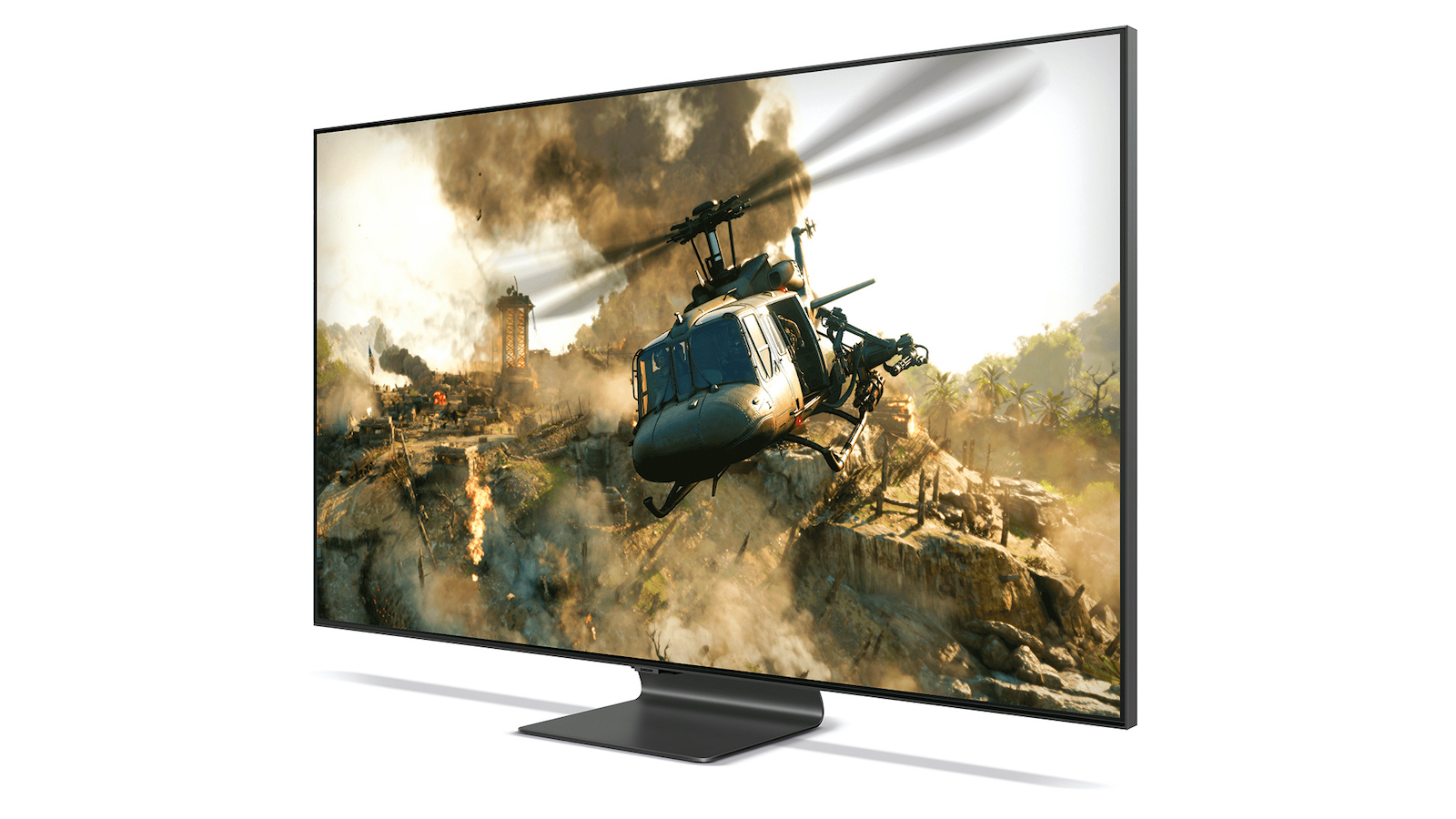
But what almost 8K? Both the PS5 and Xbox Series X tin can handle 8K in theory, just neither has the feature enabled at launch.
Information technology seems that the focus is on higher frame rates in the short term, with higher resolutions potentially coming later. Even and then, native 8K gaming seems unlikely. It's broadly agreed that neither console has the processing ability to run blockbuster games at that resolution. We might, though, see games appear that dynamically scale at resolutions above 4K before existence output as an 8K signal, much as the PS4 Pro and Xbox Ane X invariably handled 4K on games (truly native 4K games were very rare until this new console generation).
In other words, while 8K should perchance exist at the dorsum of your heed, we don't recall information technology'south essential that you buy an 8K TV right now. Such sets volition likely exist much, much more affordable by the time 8K gaming becomes a serious concern – assuming it always does. That said, there is an excellent 8K TV on this listing for those who have very deep pockets.
Right, that's the broad strokes. Now information technology's time for our list of the very all-time TVs for gaming. You'll observe that most models here are from LG and Samsung, and there's a simple reason for that – they currently offer the most complete gaming feature sets and the best gaming performance, though other brands are finally starting to catch upwards.
- All-time PS5 deals: where to buy a PS5
- All-time Xbox Serial X deals: where to buy the new Xbox
- Best gaming headsets
The best gaming TVs you can purchase
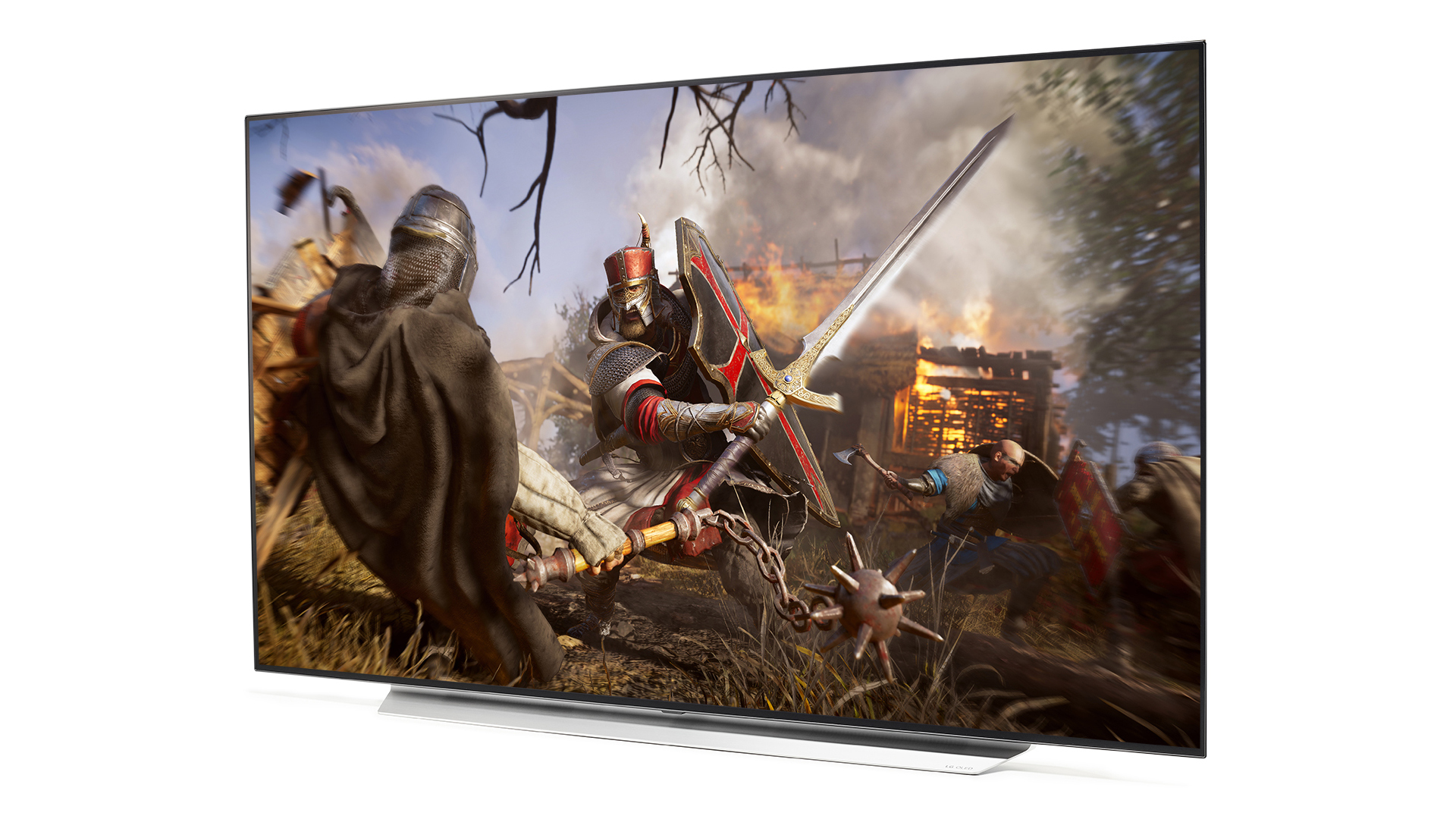
LG's new C1 isn't a huge improvement on the CX it replaces, merely information technology didn't really need to be. The picture performance and feature set up were already exemplary, and LG has slightly improved the former with its new Cinematic Motion move processing and enhanced de-contouring feature (which reduces banding), and slightly improved the latter with a improve menu arrangement and a more complete app option (all United kingdom grab-up apps are present).
As before, the C1 boasts four 40gbps HDMI 2.i sockets with support for eARC, 4K@120hz, ALLM (Auto Depression Latency Mode) and VRR (Variable Refresh Rate). VRR is supported in all three current formats, the most of import HDMI VRR format, Nvidia G-Sync and AMD Freesync Premium.
There's an HGIG option in the menus, too, which delivers more accurate contrast with HDR games. Since launch, LG has even added support for 4K@120Hz with Dolby Vision.
LG besides now has a dedicated Game Optimiser menu that gives you quick access to all of those game-related settings as well as features that adjust gaming flick performance, either based on the genre of the game you're playing or through manual tweaking of the detail in the brightest and darkest parts of the picture.
In short, in that location's no ameliorate-specified gaming TV out there, and it'southward swell with movies and TV, too. Practise as well bank check out the G1 below, though, every bit it offers all of the same features and also boasts a new, brighter OLED panel.
We've tested the C1 in its 48-inch and 65-inch sizes. It's also available as a 55-inch, 77-inch and 83-inch model. We've not nonetheless reviewed these versions merely you'll meet the latest, lowest prices for all of them beneath.
Read the total LG OLED48C1 review
Read the full LG OLED65C1 review
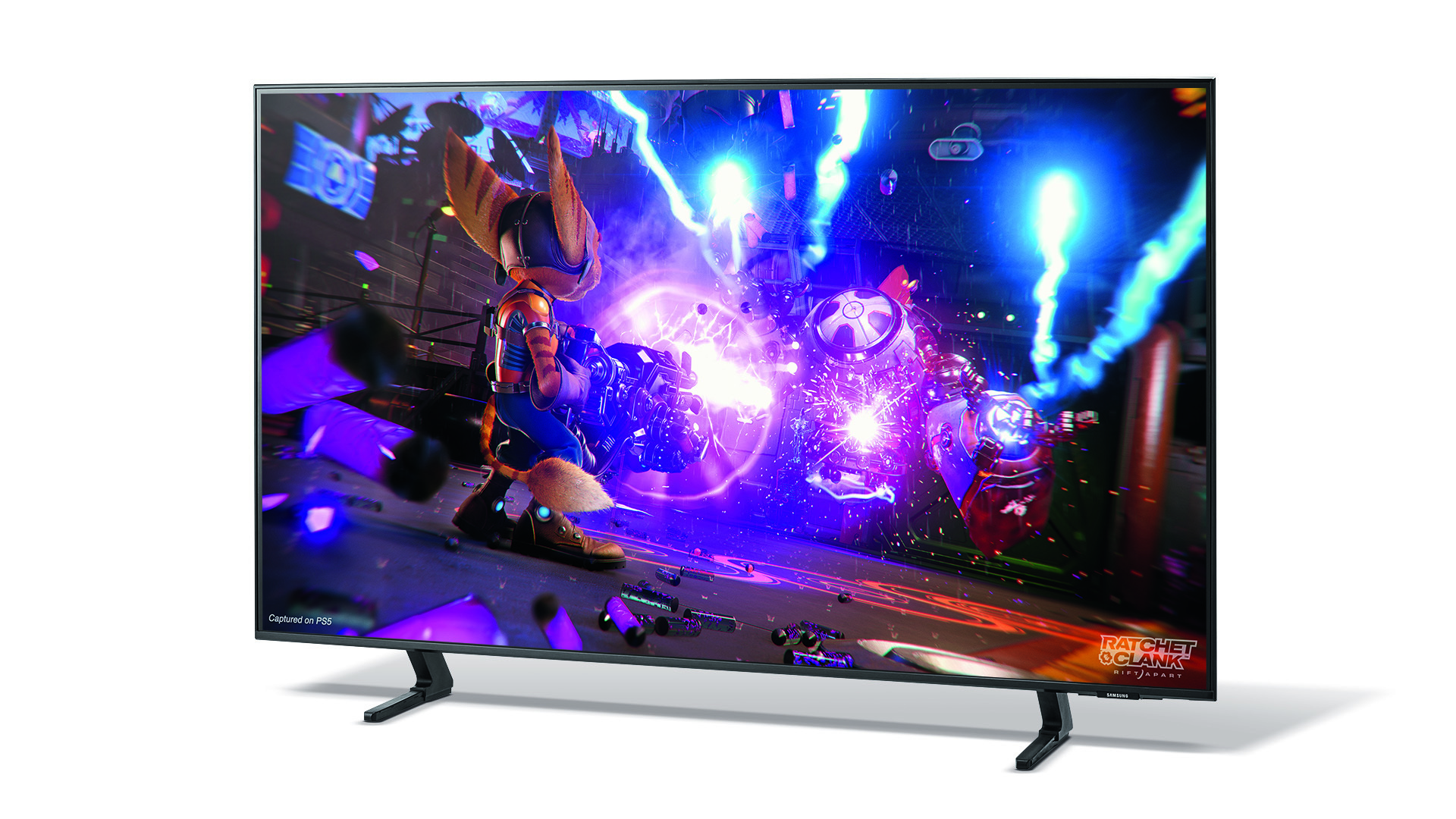
While it'due south not up there with the OLEDs and QLEDs on this list, Samsung's AU9000 LCD model is a great choice for gamers on a budget.
Unlike the cheaper AU models, the AU9000's 3 HDMIs support both VRR and 120Hz signals. This instantly makes the UE50AU9000 a much more than compelling option as a monitor for a PS5, Xbox Series X or a PC with a new loftier-stop Nvidia or AMD graphics card – even though the 120Hz back up can but exist sustained at 1080p resolutions rather than 4K.
The gaming features don't stop there, either. There's also support for ALLM, and input lag with Game way activated is a minuscule 9.2ms. You lot can call up a handy Game Bar display that shows you at a glance what graphics features a game is using.
What's more, in keeping with Samsung'south Neo QLED TVs, the 50AU9000 can support playback in 32:9 ratio from PC games that support this super-wide format.
Its brightness and rich but controlled colours play beautifully with the spectacular 4K HDR graphics capabilities of the latest gaming machines, while the support for higher and variable refresh rates joins forces with the exceptionally low input lag to contribute to a fantastically immediate and immersive experience. Deeper blacks would be nice, though.
Nosotros've tested the AU9000 in its 50-inch size. Information technology's also bachelor as a 43-inch, 55-inch, 65-inch and 75-inch model. We've non yet reviewed these versions and then can't vouch for their quality, simply yous'll however see the latest, lowest prices for all of them below.
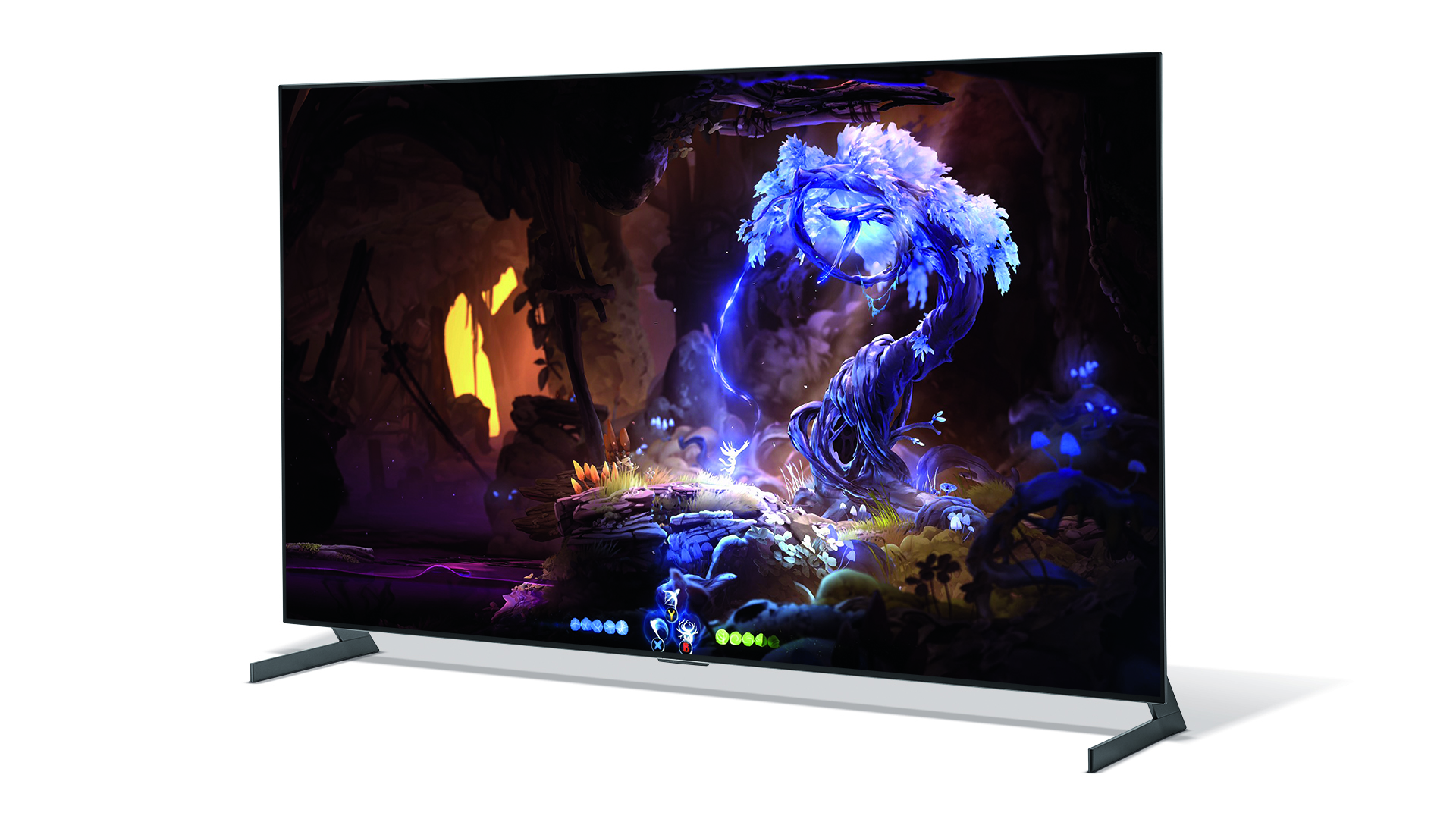
For the last few years, the C-class model has been the sensible choice of each new LG OLED range. Until now, it has been the most affordable model with the latest panel and picture processing tech: become further up the range and you lot might go amend sound and a fancier design, only you won't become a better visual performance.
For 2021, though, LG introduced a new 'OLED Evo' panel that promises increased brightness and sharpness, and to get the Evo console you have to pace up to the G1. That's slightly disappointing because you also end upwards paying extra for a rather niche design (the G1 is designed to be wall-mounted, to the extent that in that location's no stand or feet in the box) that you may non want.
Nonetheless, if the blueprint works for y'all and you don't mind forking out the extra £500, the G1 is undoubtedly the best OLED that LG has e'er produced. It takes the picture operation of last year'due south GX and CX and improves upon it in most every fashion, especially in terms of brightness, sharpness and item. That makes information technology a seriously stunning film performer.
It's also got all of the gaming features nosotros've come up to expect from LG OLEDs: four 40gbps HDMI ii.ane sockets with support for 4K@120Hz, VRR and ALLM (plus eARC); an HGIG way for more authentic contrast with HDR games; a sub-13ms input lag; and a new Game Optimiser that allows for more game-related fine-tuning and puts all options at your fingertips.
Sound is less strong, but if you were always planning to combine your new Idiot box with a separate sound system and the design works for y'all (and you lot've got deep pockets), the G1 should be seriously considered.
We tested the G1 in its 65-inch size. It'due south also available as a 55-inch and 77-inch model. Nosotros've not yet reviewed these versions but yous'll see the latest, lowest prices beneath.
Read the total LG OLED65G1 review
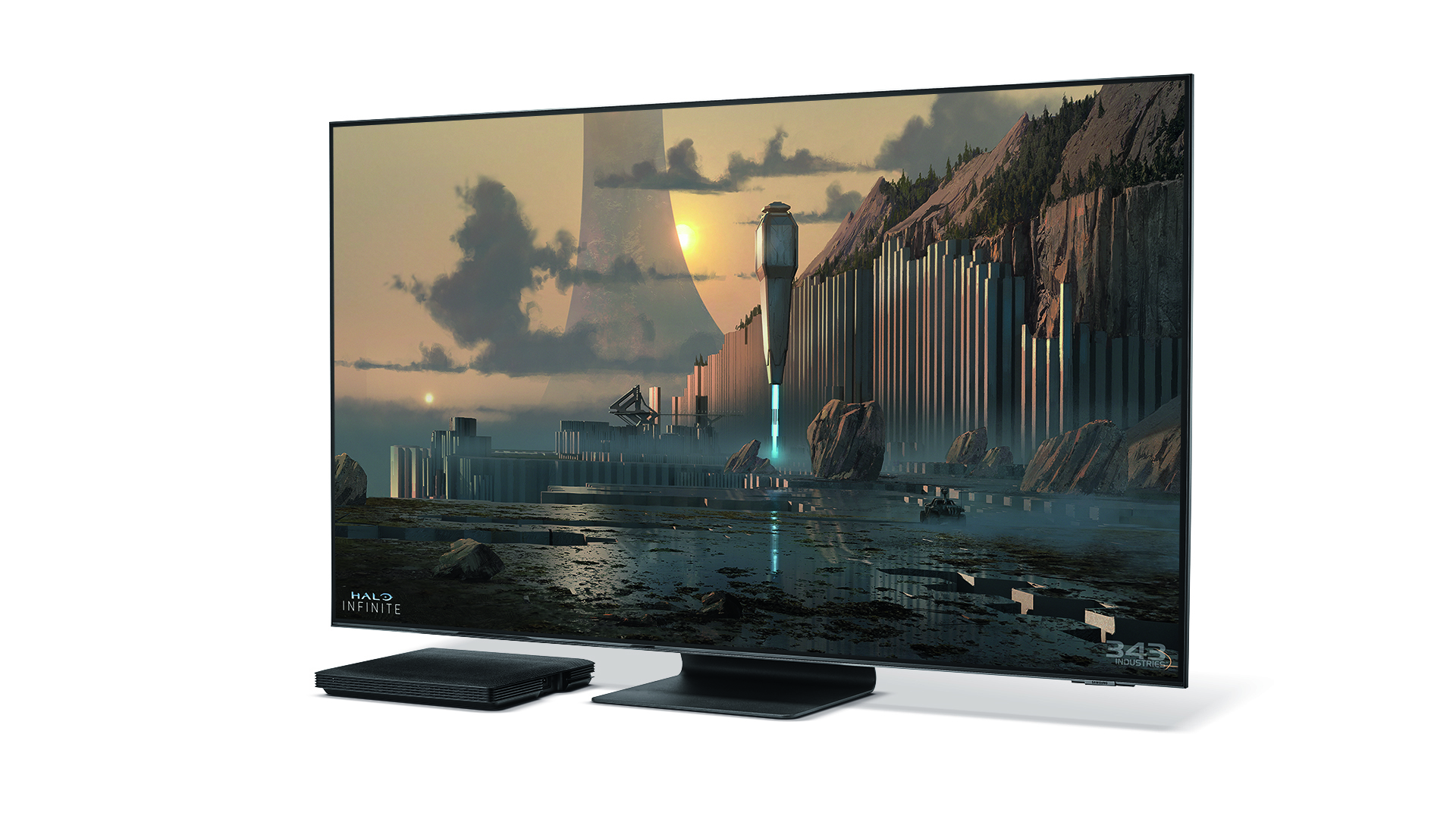
This yr looks very much similar the year of Mini LED, and Samsung is going bigger on this new backlighting technology than anyone else.
The company has developed its own Mini LEDs, which are but one-fortieth the size of traditional backlight LEDs, and combined them with its existing Breakthrough Dot tech to create a range of premium TVs that it calls Neo QLEDs. The QE65QN95A is the start Neo QLED we tested, and Samsung's current flagship 4K prepare.
In real-globe performance terms, Mini LED might non quite be the revolution that Samsung is pitching it as, but information technology is still a substantial upgrade to an already fantabulous range of TVs. The overall dissimilarity offered is staggering, and the QN95A combines near-OLED black levels with awesomely crisp white highlights and fabulously vibrant colours, all while retaining an effortless sense of naturalism.
On the gaming front, all iv of the QN95A's HDMIs back up ALLM, 4K@120Hz and VRR (Variable Refresh Rate). And VRR is supported in all three of the formats currently available: standard HDMI VRR, Nvidia 1000-Sync and AMD FreeSync (this is the first TV to be FreeSync Premium Pro-certified, in fact).
Samsung's likewise created the 'Game Bar' – a pop-up menu that gives you quick admission to various game-related features and delivers live data on the signal being received, including the VRR format and frame charge per unit. Input lag, meanwhile, has been reduced to under 10ms, which is entirely imperceptible. If you don't mind sacrificing a niggling of that speed, you tin enable some gaming-specific motion smoothing, although nosotros don't find that necessary during testing.
Finally, on the gaming front, the HGiG (HDR Gaming Interest Group) setting that was added to Samsung's 2020 QLEDs via a software update late final year is also present on the QN95A. This is well worth using in conjunction with your console's HDR calibration settings equally it results in a more than accurate film with deeper blacks and more detailed highlights.
All told, games admittedly popular when played on the QN95A, and performance is lightning-fast and super-slick. Throw in the best, about app-packed operating system in the business and this is (a lack of Dolby Vision back up bated) as complete a parcel equally can exist imagined.
We tested the QN95A in its 65-inch size. It'southward too available as a 55-inch, 75-inch and 85-inch model. We've not yet reviewed these versions but you'll run into the latest, lowest prices below.
And if you tin can live with merely one HDMI ii.1 socket, check out our review of the QE65QN94A, which lacks the QN95A's One Connect box but otherwise boasts the same characteristic ready and functioning.
Read the full Samsung QE65QN95A review
Read the full Samsung QE65QN94A review
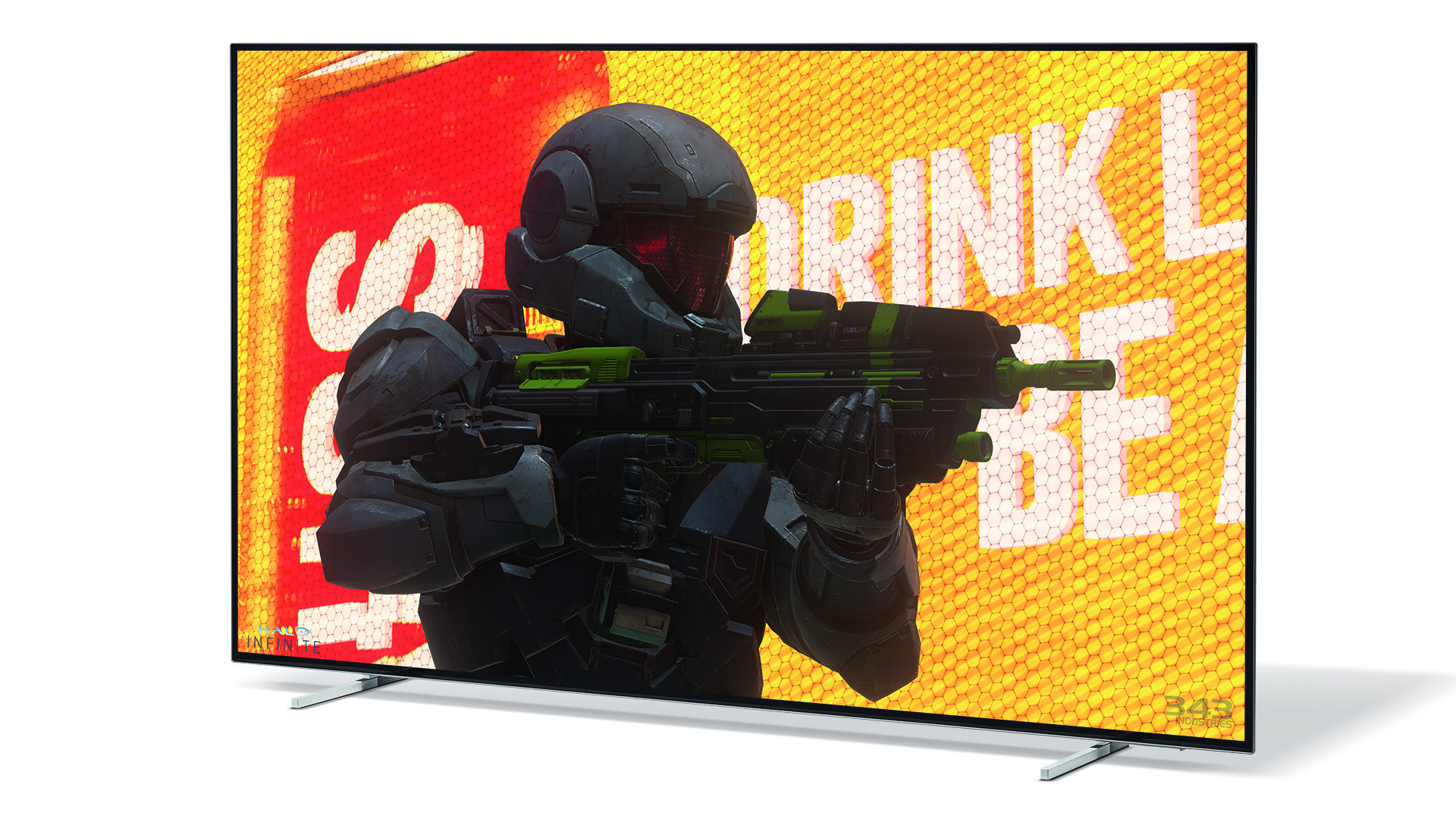
While Philips' 2020 OLEDs were bright for movies and Television, they were sadly defective next-gen gaming features. That's not the example with 2021's OLED806, which has ii total-fat 48Gbps HDMI 2.1 sockets that that support 4K@120Hz, VRR (Variable Refresh Rate) in all of its current forms (G-Sync certification is in progress), and ALLM (Auto Low Latency Way), making this a very well-specified gaming TV. The very low input lag of around 14ms certainly helps matters, too, as does the HGiG mode, which broadly results in more accurate tone mapping of HDR games.
The but gaming spec of annotation that's missing is back up for 4K@120Hz with Dolby Vision, simply Dolby Vision gaming is at to the lowest degree supported up to 60Hz.
Ane other thing to deport in mind is that one of the two HDMI 2.one sockets is also the one that handles eARC (Enhanced Audio Return Channel), which ways that if you lot have 2 HDMI 2.i sources (an Xbox Serial 10 and PS5 or a high-end gaming PC), you're not besides going to be able to send audio via eARC to a soundbar or AV amplifier. This is a limitation of all TVs that nosotros've tested that take 2 HDMI 2.one sockets and, unlike those others, Philips does somewhat mitigate the issue by supporting standard ARC via its other three HDMI sockets. This won't get you lossless, TrueHD Dolby Atmos, but it will get you Atmos in the Dolby Digital+ format, and nosotros doubt that many will hear much of a departure.
In terms of the overall performance, the OLED806 is a stunner. Sharper and punchier than rival OLEDs, with a vibrant approach that suits games without over-cooking them. Sound is practiced by TV standards, too, and the gorgeous Ambilight technology adds an actress dose of the spectacular to everything you play and scout.
We've tested the OLED806 in its 48-inch and 65-inch sizes. It'south besides available every bit a 55-inch and 77-inch model. We've not however reviewed these versions but yous'll encounter the latest, lowest prices for all of them below.
Read the full Philips 48OLED806 review
Read the full Philips 65OLED806 review
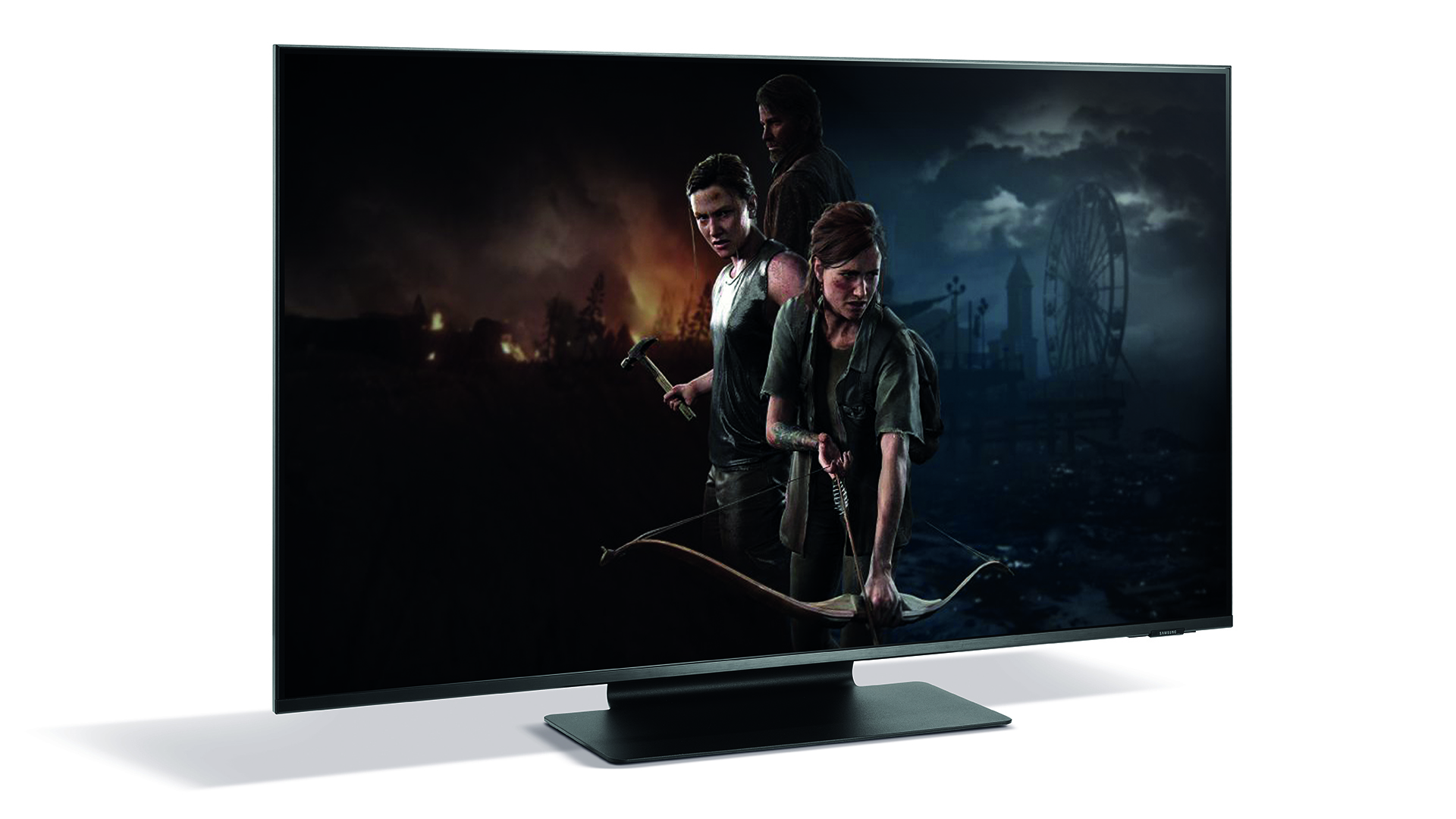
Merely because a TV is small by today's increasingly expansive standards doesn't hateful information technology has to be deadening. The 50-inch Samsung QE50QN90A is a case in point: here we have a relatively diminutive screen that throws everything but the proverbial kitchen sink at delivering a premium picture and sound functioning to rival the best that its much bigger brethren take to offer.
For starters, this is a Neo QLED model, which ways information technology combines Quantum Dots with a Mini LED backlight. This results in a supremely brilliant and vibrant picture with truly excellent dissimilarity – that'south a particularly tasty combination for gaming. While only one of the HDMIs is 2.1-certified (LG'south 48-inch C1 has 4 HDMI two.1 sockets), it does support all of the key gaming technologies, including 4K/120Hz, VRR and ALLM, and there's an HGiG mode for more accurate HDR tone mapping.
Images await exceptionally detailed and crisp with both video and gaming sources, fully selling the screen's native 4K resolution despite the relatively small 50-inch screen size, and the sound is good, too, with proficient punch and weight.
This is a great purchase if you want a premium gaming experience at a smaller size, just do too check out the LG OLED48C1.
Those looking for a larger screen might be interested to read that the QN90A is available in a wide diverseness of sizes, simply be aware that these all appear to employ a different panel type (IPS rather than the 50-inch model's VA), so performance may well vary. Still, y'all'll find the latest, lowest prices for every model in the range beneath.
Read the total Samsung QE50QN90A review

You certainly don't demand an 8K TV for gaming, what with at that place beingness no 8K games or even consoles out there, merely the extra resolution does actually help when you go into very large screen sizes. That'southward because it increases pixel density which, when combined with excellent upscaling such as that of the QN900A, results in a sharper, crisper picture than y'all go from similarly sized 4K models.
The QN900A as well boasts all of Samsung'south tiptop gaming tech. All four of its 1 Connect box's HDMIs are two.i-certified, with full support for ALLM, 4K@120Hz and VRR (Variable Refresh Rate). In that location'due south an HGIG setting, likewise. A lack of Dolby Vision is the only disappointing omission, and that'southward not a big bargain for games... yet.
Samsung'south also created the 'Game Bar' – a popular-up menu that gives you quick access to diverse game-related features and delivers live information on the signal existence received, including the VRR format and frame rate. Input lag is astonishingly depression – depression enough, in fact, that you tin can beget to cede a few milliseconds to enable some gaming-specific movement smoothing, should you so wish.
To top it all off, this is i of Samsung'southward Mini LED-backlit Neo QLED models. It goes brilliantly bright and, thanks to thousands of individual zones, has excellent dissimilarity, as well. If that makes it sound like a bit of a edgeless instrument, the opposite is actually truthful – the QN900A is only equally capable of delivering nuance and subtlety as it is awesome punch and vibrancy. This is a truly exceptional Idiot box that volition advantage those willing to sacrifice the money and space.
Read the full Samsung QE75QN900A review
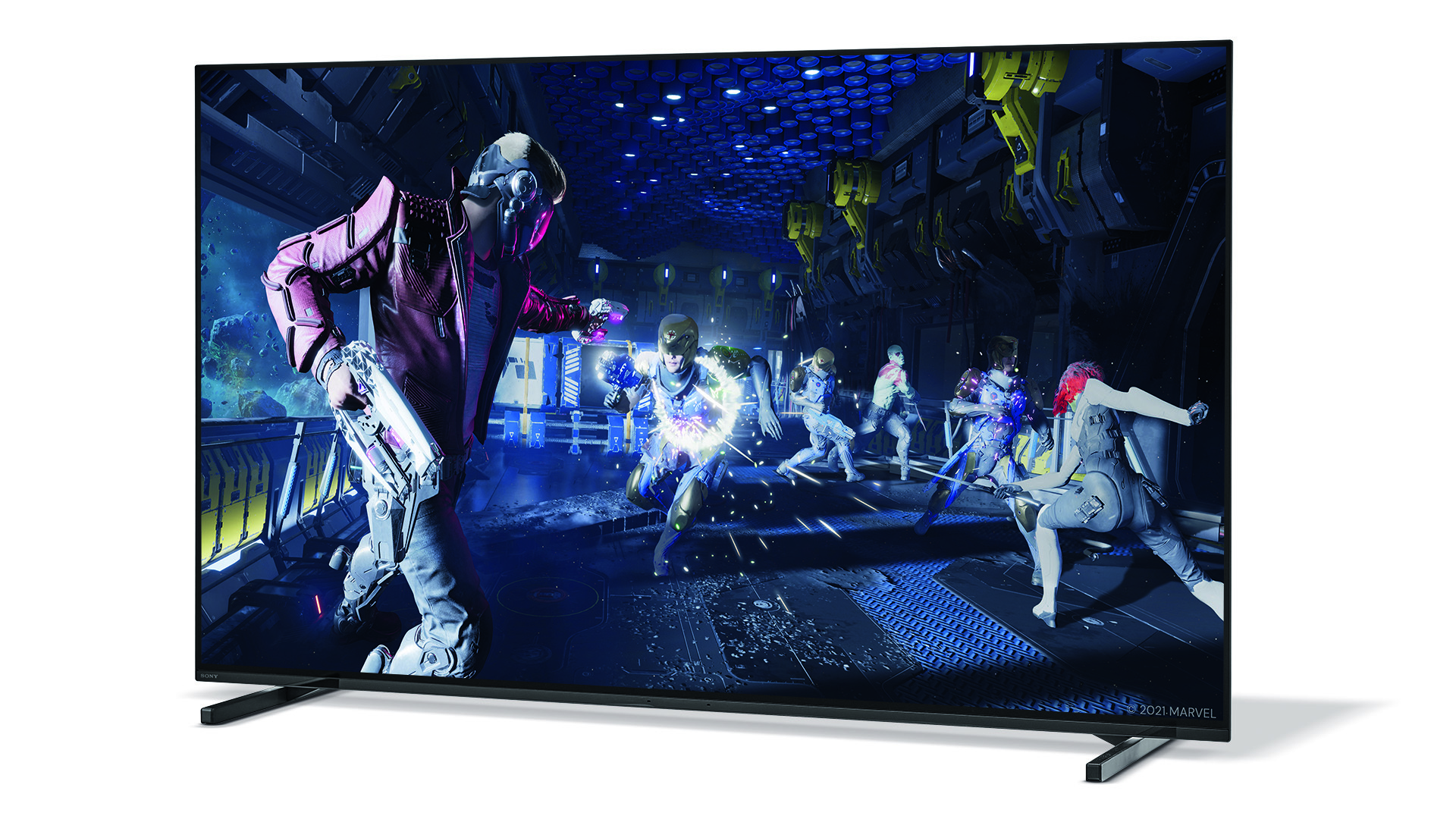
The A80J might well exist the all-time performance-per-pound Television that Sony has e'er produced, boasting most of the luminescence of the flagship A90J at a much lower cost. It's actually improve than the LGs and Samsungs in this list when it comes to watching movies and TV shows, and but ends up below them in this listing because it's slightly behind in terms of next-gen gaming specs.
The good news is that the A80J does have HDMI ii.1 sockets that support 4K@120Hz and ALLM, but there are only 2 of them and one of them also handles eARC/ARC, potentially limiting you to connecting just ane HDMI 2.1 source if you demand to use the other for your audio system. VRR is missing at this stage, too – Sony says this volition exist added via a firmware update, but said update keeps getting delayed.
Finally, while the A80J'south 4K@120Hz feature works fine with a PS5, it causes problems with an Xbox Series Ten if Dolby Atmos sound is also enabled. It also appears to disable ALLM, which works fine when 60Hz is selected.
It'southward too worth noting that to enable 4K@120Hz, Dolby Vision is disabled, and so you won't get Dolby Vision from the Xbox Series X'southward built-in apps unless you beginning switch the Goggle box from its 'Enhanced Format' mode (which enables 4K@120Hz) to its 'Enhanced Format (Dolby Vision)' way. You and then have to switch back if you want to play a game in 4K@120Hz. With an LG OLED, you don't have to leap through whatever of these hoops – it simply works.
Enough of caveats, and so, but none that should exist of concern to PS5 gamers, and the A80J'due south superb picture and sound operation translates very well indeed to 4K and Hard disk games.
We've tested the A80J in its 55-inch size, just it'southward also available as a 65-inch and 77-inch model. We've not still reviewed those versions but you'll see the latest, lowest prices for all models below.
Read the full Sony XR-55A80J review
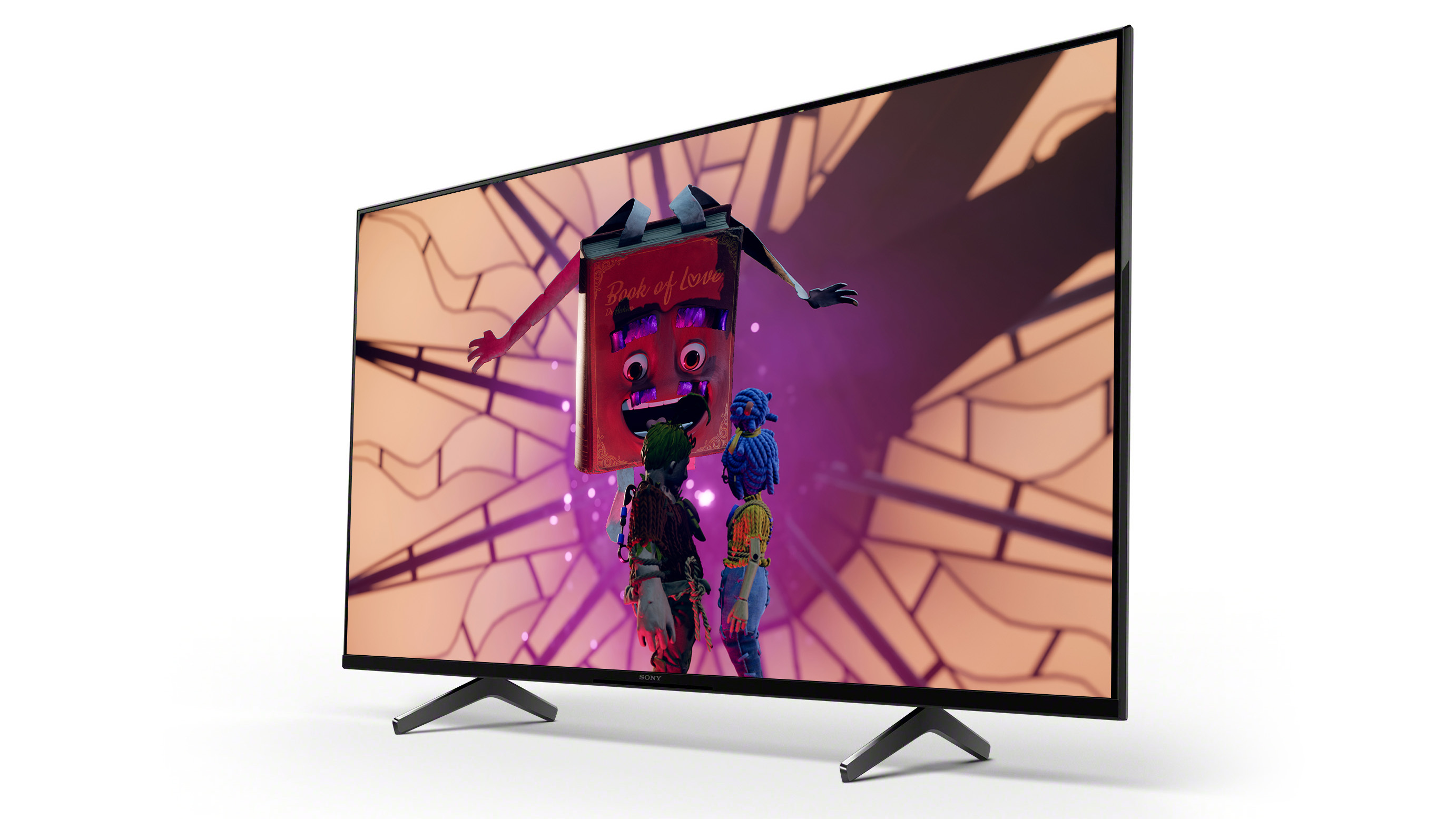
The X90J's pictures aren't exactly shy and retiring – and that'due south fine by us. Exceptional amounts of brightness go far onto the screen with startling consistency, delivering some of the most flat-out punchy and bright HDR pictures we've ever seen on a 50-inch Boob tube.
It'south not merely brightness for effulgence sake, either. Sony is unashamedly using information technology to deliver every bit uncompromising an HDR experience every bit it can within its backlight limitations. And then daylight HDR scenes look more than natural and realistically bright past far than they practise on any other electric current TV in its size and course.
Even more impressively, the XR-50X90J has plenty headroom with its brightness to ensure that the brightest highlights of already bright HDR images bask that extra footstep up in intensity that normally only the most premium TVs provide.
The price yous pay for this superb effulgence is slightly elevated blackness levels and occasional backlight blooming, but neither issue is a huge deal-breaker, and you can also add fantabulous motion processing, natural colours and decently dynamic sound to the list of the Sony'south strong points.
It's also got two HDMI 2.i ports that support 4K at 120Hz, making it a good choice for next-gen gamers. VRR support is due to be added, too, although this has been promised for a while.
Also equally the fifty-inch model, we've also tested the X90J at 65 inches, and that's a very solid gaming TV, too. There are likewise 55-inch and 75-inch versions bachelor. You'll find the latest, lowest prices below.
Read the full Sony XR-50X90J review
Read the total Sony XR-65X90J review
- Looking for more of an all-rounder? These are the best TVs currently bachelor
- Hither are the Best inexpensive TVs for those on a tight upkeep
- If you're notwithstanding torn on which console to buy, check out our PS5 vs Xbox Series 10 shootout
Source: https://www.whathifi.com/best-buys/best-gaming-tvs
0 Response to "what to look for in 4k gaming tv"
Post a Comment