Black and White Stripe and Blue Baby Shower
I'll endeavour to list as many pride colors as I can think of.
 Gay Pride (Six stripes of the rainbow but without indigo- Gay, Gay Men, Lesbians, Homosexuality, and sometimes the entire LGBT customs. This was created by a San Francisco creative person named Gilbert Baker in 1978. The flag originally had the stripes of all the colors of the rainbow and one pinkish stripe; from top to bottom, information technology was pink, carmine, orange, xanthous, greenish, bluish, violet/purple, and indigo. Pink represented sex, reddish represented life, orange represented healing, yellowish represented sunlight, green represented nature, blue represented art, indigo represented serenity, and violet represented spirit. Afterwards, pink was removed from the flag considering of availability of fabric problems, and then it became the seven colors of the rainbow. In 1979, indigo was removed because of visibility reasons when posted on Market Street in San Francisco, so the current flag has six stripes: ruby, orangish, yellowish, green, blue, and violet/purple. The term "homosexual" was coined in the mid-19th century by an Austro-Hungarian journalist named Károly Mária Kertbeny.)
 Labrys Lesbian Pride ( Purple with Labrys in inverted black triangle [different versions exist] - Lesbians, women, and feminism, and all people who identify every bit female who are attracted to females. Labrys became a symbol of lesbians and feminists due to the popularity of a female empowerment publication called Labrys Magazine. In addition, the black triangle is a symbol of lesbians due to the fact that many lesbians were forced to wear it in concentration camps during the Holocaust nether the idea that they were "asocial" and did not conform to heteronormativity).
 Bisexual Pride (Pink, Purple, and Blue - Bisexuals. Pink stands for attraction to females, bluish stands for attraction to males, and purple stands for attraction to both.)
 Pansexual ( Pinkish, yellow, blue - Pansexual. According to Wikipedia: "The pansexual pride flag was designed every bit a symbol for the pansexual community to utilise. The pansexual pride flag has been constitute on various internet sites since mid-2010. . . . The pansexual pride flag is used to increase visibility and recognition for the pansexual customs, and to distinguish it from bisexuality. Information technology is used to indicate that pansexuals have romantic attractions and relationships with people of dissimilar genders and sexualities. . . . The pansexual flag consists of 3 colored horizontal bars: pink, yellow, and blueish. The blue portion of the flag represents those who place within the male spectrum (regardless of biological sex), the pink represents those who identify inside the female person spectrum (regardless of biological sex), and the yellowish portion, found in betwixt the blue and pink portions, represents not-binary attraction; such as androgynous, agender, bigender and genderfluid people.)
 Omnisexual Pride - (Five horizontal stripes, from tiptop to bottom: light pink, pink, dark blue, blue, light blue - The origins of this flag is unknown to me. I exercise not know who coined the term "omnisexual," nor who created the flag. Thus, I am uncertain what the flag colors hateful, only my guess is that the shades of pink and blue stand for spectra of different and all genders, to which omnisexuals are attracted.)
 Polysexual Pride (Pink, green, and blue - Polysexual. Based on bisexual colors.. Pinkish represents attraction to females. Blue represents attraction to males. Green virtually probable represents allure to people with non-binary gender identities.)
 Transgender Pride ( Light blue stripe, pink stripe, white stripe, pink stripe, blue stripe - Transgender people. This flag was created past a trans* woman named Monica Helms who says: "The stripes at the top and lesser are light blue, the traditional color for infant boys. The stripes next to them are pink, the traditional color for babe girls. The stripe in the middle is white, for those who are intersex, transitioning or consider themselves having a neutral or undefined gender. The blueprint is such that no matter which fashion you fly it, it is e'er right, signifying usa finding correctness in our lives.")
 Skoliosexual Pride (Yellow, green, white, and black horizontal lines with a lavender outline of a eye in the middle - Skoliosexual/Ceterosexual. Xanthous represents being not-binary or attracted to not-binary people. Dark-green represents bigender, 3rd gender, genderqueer, or other genders. White and black stand for neutral genderlessness, agender, questioning gender identity, etc. The outline of the lavander heart represents love exterior the gender norms. I created this flag, but
is the one who invented the give-and-take. Too, ceterosexual is another word for skoliosexual.)
 Heteroflexible Pride (Six grey spectrum stripes with six thin colorful rainbow stripes in the middle. Colour stripes, from summit to bottom: reddish, orange, yellow, green, blue, violet - Heteroflexible pride.The grey spectrum represents a basis of heterosexuality while the six-colored rainbow stripe represents the flexible homosexual element.)
 Homoflexible Pride (Half dozen colorful rainbow stripes with vi thin grey spectrum in the middle. Color stripes, in order from peak to lesser: carmine, orange, yellow, green, bluish, violet - Homoflexible Pride. Co-ordinate to its creator: "You've got your basic vi stripe rainbow flag, more often than not to match with the heterosexual flag. The stripe of heterosexual flag is is the 'flexible' function.")
 Abrosexual Pride (Five horizontal stripes. From top to bottom: turquoise, light turquoise, white, pink, and hot pink - Abrosexual Pride. An anonymous tumblr user coined the term. The flag was created by a tumblr user named Mod Chad after another anonymous person requested it. The anonymous user said, "could you guys possibly make an abrosexual pride flag?? maybe something forth the lines of the typical 5 color flags that fades from #46D294 to white to #EE1766." Information technology is unknown why this person chose these colors specifically.)
 Biromantic Pride (Three horizontal stripes and a eye split into darker corresponding three horizontal stripes. From summit to bottom, the three stripes in the background are light pink, calorie-free purple or mayhap lavender, and lite blueish. From top to bottom, the middle'south stripes are pink, majestic, and blue -I exercise not know who created the flag, coined the term, or what the flag'south creator choose the colors to mean. However, information technology is obvious that the pink, royal, and blue colour scheme is from the bisexual pride flag colour [see above]. Pink stands for attraction to females, blue stands for attraction to males, and majestic represents attraction to both males and females. The heart about probable represents romantic attraction.)
 Biromantic Homosexual Pride (Vi horizontal stripes in the background, which are the colors of the rainbow with indigo left out, and a heart in the foreground that is divided into horizontal stripes [from elevation to bottom] pink, regal, and blue - Biromantic Homosexual Pride.The term "homosexual" was coined in the mid-19th century past an Austro-Hungarian journalist named Károly Mária Kertbeny. This is a combination flag that represents people who are biromantic homosexuals. I practice not know who created the flag, coined the term biromantic, or what the flag means according to its creator. Still, it seems to exist a combination of the gay rainbow pride flag and the bisexual flag. The gay pride flag is probably represented in the groundwork by the six stripes (rainbow but without indigo), which symbolizes attraction to the opposite gender. If the colors correspond to the rainbow pride flag, then cherry-red means life, orange means healing, yellow means sunlight, green means nature, blue means art, and violet stands for spirit. The heart is probably a symbol for romantic orientation. The pinkish on the heart probably represent attraction to females, blue probably represents attraction to males, and royal probably represents attraction to both).
 Biromantic Heterosexual Pride (Vi horizontal black and white stripes [top to bottom alternating starting with black] in the groundwork, and in front of that is a middle divided into three horizontal stripes which are [acme to lesser] pinkish, purple, and blue - Biromantic Heterosexual Pride. This is a combination flag that represents people who are biromantic heterosexuals. The term "heterosexual" was coined in the mid-19th century by an Austro-Hungarian announcer named Károly Mária Kertbeny. I practise non know who created the flag, coined the term biromantic, or what the flag means according to its creator. Nonetheless, it seems to be a combination of the heterosexual flag and the bisexual flag. The heterosexual flag is probably represented in the background past the blackness and white stripes. Black and white most likely stand for reverse gender attraction. The heart is probably a symbol for romantic orientation. The pinkish on the heart probably represent attraction to females, blue probably represents attraction to males, and purple probably represents attraction to both.)
 Panromantic Pride (Three horizontal stripes and a eye in the middle, with the stripes also going across the centre, though with darker/brighter colors. The stripes are light pink, pale yellow, and low-cal blueish in order from top to bottom. The horizontal stripes that intersect these stripes and form the heart are pink, yellow, and blue from height to bottom - Panromantic Pride. I do not know who invented this version of thepanromantic heart symbol or flag, but it is clearly based on the pansexual flag that is pink, yellow, and bluish. Pink stands for attraction to females. Blueish stands for allure to males. Yellow stands for non-binary allure. The heart shape is nigh probable a symbol for romantic orientation. I do not know who coined the term panromantic.)
 Panromantic Homosexual Pride (Half-dozen horizontal stripes in the background and a heart divided into 3 horizontal stripes in the foreground. The groundwork stripes are, from top to bottom: red, orange, yellow, light-green, bluish, and violet/regal. The 3 horizontal stripes of the striped heart are pink, yellow, and blue, in order of top to bottom - Panromantic Homosexual Pride. This is a combo flag that pairs a specific romantic orientation [panromanticism] with a specific sexual orientation [homosexuality]. I practice not know who invented the panromantic centre symbol or flag, but it is clearly based on the pansexual flag that is pink, yellow, and blue. Pinkish stands for attraction to females. Blueish stands for allure to males. Xanthous stands for not-binary attraction. The eye shape is most likely a symbol for romantic orientation. I do non know who invented the term "panromantic," only the term "homosexual" was coined in the mid-19th century by an Austro-Hungarian journalist named Károly Mária Kertbeny.)
 Panromantic Heterosexual Pride (Six horizontal blackness and white stripes [elevation to bottom starting with black] in the background, and in front of that is a heart divided into three horizontal stripes which are [top to bottom] pink, yellow, and bluish - Panromantic Heterosexual Pride.This is a combo flag that pairs a specific romantic orientation [panromanticism] with a specific sexual orientation [heterosexuality]. I do not know who invented the panromantic heart symbol or flag, but information technology is clearly based on the pansexual flag that is pinkish, yellow, and blue. Pink stands for allure to females. Blueish stands for attraction to males. Xanthous stands for non-binary allure. The middle shape is virtually likely a symbol for romantic orientation. The heterosexual flag in the background is represented in the background past the black and white stripes. Black and white most likely represent opposite gender attraction or the gay rainbow pride flag with its colors removed. I do not know who coined the term " panromantic." The term "heterosexual" was coined in the mid-19th century by an Austro-Hungarian journalist named Károly Mária Kertbeny. )
 Panromantic Asexual Pride (4 horizontal stripes in the background and a eye divided into three horizontal stripes in the foreground. The background stripes are, from top to bottom: black, grayness, white, and purple. The three horizontal stripes of the heart are pink, yellowish, and blueish, in order of top to lesser - Panromantic Asexual Pride.This is a philharmonic flag that pairs a specific romantic orientation [panromanticism] with a specific sexual orientation [asexuality]. The person who created thepanromantic asexual flag is deviantART usercrownstamps.crownstamps did not mention what the colors and symbols and of the flag means, but it is adequately sure that they combined the asexual flag [black, gray, white, and purple horizontal stripes] with the pink, yellow, and blue striped heart symbol of panromanticism. I practise not know who invented the panromantic symbol or flag. According tothis commodity: "In the Summer of 2010, a number of asexuality sites, led by users on AVEN, came up with a number of designs for an asexuality flag, and so held a multi-stage vote to decide the winner The selected design was created by AVEN user standup, and first posted at 4:36 PM on June 30th, 2010.")
 2-Spirit Pride ( Rainbow flag with a Native American symbol in the eye - 2-Spirit identified people. The rainbow represents the LGBT spectrum, and the Native American symbol represents the cultural origin of Two Spirit.)
 Genderqueer Pride ( Lavander, white, and night green - Genderqueer Pride. Lavender is a mixture of bluish and pink and represents genderqueer people who place as both male and female. The white stripe represents genderqueer people who fall exterior of the female-male binary. Dark green represents the inverse of lavender for those who do non identify as female nor male).
 Feather Pride ( A gold phoenix in forepart of red triangles and a blackness and white triangle pattern - Elevate pride, drag queen pride, drag king pride, pride for those attracted to people in drag, and other fetishes. The phoenix is a symbol of rebirth while the red triangles represent the passion that the elevate community had during the early days of the AIDS epidemic. Notation: The Plume Pride flag has nothing to practise with fetishes apropos feathers or birds. The name comes strictly from the phoenix symbol and but represents the drag community, people attracted to people in drag, and similar sexual orientations and gender identities.)
 Androgynous Pride ( Grey flag with an equal sign in which the top function is blue and the bottom is pink - Androgyny. The gray part of the flag represents the gray area between genders. The equal sign represents the equality betwixt men and women.)
 Bigender Pride ( Imperial, calorie-free pink, lite blue, cyan, and bluish - Bigender people. This is one of the well-nigh popular bigender flags. I am not entirely sure of its origins nor the definitive pregnant of its colors, but an educated gauge would be that white stand for trans* identity, light pink and shades of blue might correspond femininity and masculinity, and purple represents the mixture of masculine and feminine identities considering bluish and pinkish brand purple.)
 Intersex Pride ( Imperial circle against a yellow background - Intersexuality. Yellowish represents neutrality in gender instead of associating masculinity with bluish and femininity with pinkish. It is too the chief color of the Hermaphrodite Flag. The circle symbolizes wholeness).
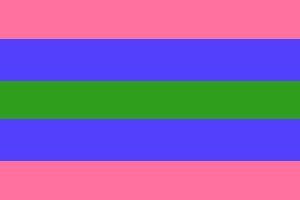 Trigender Pride ( Pinkish stripe, blueish stripe, green stripe, blue stripe, and pink stripe - Trigender and perchance Third Gender. Pink stands for femininity or female gender, bluish represents masculinity or male gender, and green represents not-binary.)
 Hermaphrodite Pride ( Stripes in shades of orange, yellowish, and greenish with purple Mercury symbol - Hermaphrodite Pride. Yellow represents neutrality in gender instead of associating masculinity with bluish and femininity with pinkish. The flag is based on the Gay Pride flag in the sense of having a spectrum of hues that correspond a fluid spectrum of gender. The symbol in the center is that of the planet and Roman god Mercury, which is imperial symbolizing the mixture of pink and blue every bit feminine and male person colors. Though I am not completely certain why Mercury's symbol was chosen, I would guess that it may have been considering Mercury is the Roman equivalent of the Greek god Hermes, begetter of Hermaphroditus, the namesake of the term "hermaphrodite." NOTE: Hermaphrodite should not exist confused with "intersex." The word "intersex" is an umbrella term used for a diverseness of weather in which a person is born with a reproductive or sexual anatomy that doesn't seem to fit the typical definitions of female or male. According toPride-Flags:
" The word 'hermaphrodite' originally meant 'a person or animal having both male person and female sex organs or other sexual characteristics, either abnormally or (in the example of some organisms) every bit the natural condition.' It is a stigmatizing and misleading discussion when used to refer to an intersex person. There is growing momentum to eliminate the word 'hermaphrodite' from medical literature and to use the word 'intersex' in its identify. While some intersex people do repossess the word 'hermaphrodite' with pride to reference themselves, it should be generally avoided except under specific circumstances. This word is not interchangeable with intersex and you should only refer to someone as hermaphrodite if they specifically tell you that you tin." )
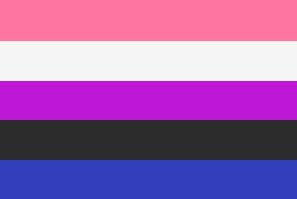 Genderfluid Pride ( Pink, white, regal, blackness, blue - Genderfluid. Pink represents femininity. White represents all genders. Purple represents masculinity and femininity. Black represents genderlessness. Bluish stands for masculinity.)
 Genderflux Pride ( Vi horizontal stripes, from top to lesser: Pink, light pink, pale yellow, grey, cyan, and blueish. The lite pink and cyan stripes are thinner than the rest - Genderflux . Created bynova-pride-flags with colors chosen to crusade less eyestrain and visual sensitivity.)
 Nonbinary Pride ( Horizontal stripes. From top to Bottom: xanthous, white, royal, and blackness - Non-binary gender identity. According to Nonbinary.org information technology was invented by "Kye Rowan in 2014. Yellow is for gender without reference to the gender binary. White: those with many or all genders. Majestic: a mix of female and male. Black: without gender.")
 Pangender Pride (Vii horizontal stripes. From top to bottom: pale yellowish, pink, light pink, white, low-cal pinkish, pink, and stake yellow. - Pangender. created by Pangendering] and according to Nonbinary.org: "based on the agender pride flag. The colors are very brilliant so that they represent the multiplicity of genders [because the white light, in the electromagnetic spectrum, is a combination of all colors.]")
 Panflux Pride (Five horizontal stripes. From top to lesser: hot pink, orange, yellow, calorie-free greenish, and blue - Panflux pride. CinnamonGem created the flag, but their deviantART account is deactivated. It is unknown what the colors mean, but I would judge would be that hot pink, xanthous, and blue are derived from the pansexual flag and the other colors (orange and xanthous) exist to create more of the flow of a spectrum. NOT to exist confused with the gay rainbow flag, which has 6 stripes and uses red instead of hot pink.)
 Panfluid Pride (Seven horizontal stripes. From top to bottom: Low-cal purple, lavender, light orange, yellow, lite orange, lavander, light majestic. The term "panfluid" was coined past nepkrisprite, who also designed this flag. The meanings of its colors are unknown).
 Polygender Pride (V horizontal stripes. From top to bottom: Black, grey, pink, yellow blue - Polygender Pride. According to its creator the-war-outside--our-door it besides represents "anyone whose identity includes more than 1 gender- genderfluid people, bigender people, trigender people, polygender people, some demigender people, etc." the-war-outside--our-door explains the colors: "The pink and blue stripes are for masculinity and femininity respectively, and those who feel partially male/female. The yellow is for genders outside the binary. The black is for those who experience partially agender- I know it'southward not a gender, but I've heard of quite a few people who would draw themself as bigender with agender as one of their genders. The gray is for those whose gender(south) alter or fluctuate.")
 Asexual Pride (Four horizontal stripes. From top to bottom: Blackness, grey, white, and purple. - Asexual Pride. Blackness stands for asexuality. Grey stands for Grey-Asexuality and Demisexuality. White stands for non-asexual partners and allies. Purple represents customs. The flag was created by an AVEN user called standup in 2010 as role of a contest. The total story is hither: Asexual Flag History).
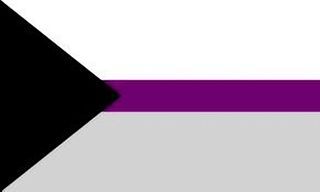 Demisexual Pride ( A thick white stripe, thin purple stripe, and a thick greyness stripe with a blackness triangle on the dominating the left side - Demisexuals. Blackness stands for asexuality. Grey represents Gray-Ace and demisexuality. White represents sexuality. Purple represents community.)
 Autochorissexual Pride ( A triangle pointing toward with horizontal stripes in the colors purple, white, grey, and black juxtaposed to two smaller triangles with horizontal stripes in the colors black, grayness, white, and majestic - Autochorissexuality. [Anthony Bogaert created the term and says that it is a sub-section of asexuality. It represents people who do non want to take sexual activity with some other person nor experience sexual allure to others but however are aroused by observing sexual content that may include pornography, sexual fantasies, erotica, etc.]Hunterinabrowncoat created the flag. Regal, white, grey, and black are the colors of the asexual flag. The black stripe represents asexuality. The grey stripe represents greyness area betwixt sexual and asexual feelings. The white stripe represents sexuality. The imperial stripe represents customs. The inverted triangle represents the thought that autochorissexuals have an inverted perspective on sexuality; Hunterinabrowncoat says that asexuals are non attracted to others though some asexuals appoint or desire to engage in sexual activities while autochorissexuals have sexual allure but do not want to engage in sexual activities).
 Graysexual Pride ( Horizontal stripes [in order of elevation to bottom]: purple, grey, white, grayness, and purple - Greysexuality. Created by Shikku27316 every bit a proposed flag. "My original explanation was kinda impaired. The purple was asexuality, the white was allosexuality, and the grey was the region of "getting over" asexuality, and then "getting over" allosexuality to be asexual again, but that sounds pretty dumb, plus it's not the only definition of greysexual. And then, the colours mean the same, but information technology's kinda symbolising the 2 coming together to make the grey surface area." - Shikku27316 [Of course, I don't think it was impaired.
  If y'all become the chance, say something prissy near it to Shikku]).
 Autosexual Pride (ii horizontal stripes, from tiptop to bottom: low-cal blue/cyan and grey; a cherry-red heart in the center with a black outline that ends in an arrow - Autosexuality. The term was coined by sex researcher Bernard Apfelbaum. The creator isaturinfortheworse ,whohad partially forgotten the pregnant of the flag until asked by an anonymous person and says: "I call up the scarlet is for dear/sexual attraction. Grey for some connexion to the ace/gray-ace flag because at that place's a lot of overlap. I'm actually stumped by the pale blue . . . something to do with the pansexual flag, i think? No, right, okay; I've got it, I think. So the main people - equally far as I can tell, and by no means am I suggesting this is all - who are autosexual are either Potential Attraction to Literally Anyone (as in pansexual, cocky inclusive) or are attracted to just themselves and frequently identify as ace/grey-ace. And then the blue is from the pansexual flag and the greyness is from the ace flag. With this in mind, I just thought of a simpler flag: grey stripe, red stripe, blue stripe.")
 DemiromanticPride (Blackness triangle on the left side, three horizontal stripes, from elevation to bottom: white, light-green, and gray. The green line is very thin - Demiromanticism. I practice not entirely know who created this flag (or what the colors originally mean). However, using an educated guess based on what these colors mean in other pride flags, I remember: white might represent sexuality, greenish might represent the reverse of cherry-red as being associated with romanticism, blackness might represent asexuality, grey might correspond Greyness-sexuality or the Gray-sexual spectrum. The blackness triangle mimics that of the demisexual flag).
 Demigender Pride (Five horizontal stripes. From top to bottom: thin grey line, thick yellow line, sparse white line, thick yellow line, and sparse grey line. Proposed Demigender Flag. Sometimes people use the deminonbinary flag [run across below] as both the deminonbinary and demigender flags. I do not know who coined the term "demigender" nor who designed this i. I found it on Nonbinary.org's Demigender article, which explains the flag colors as: "Yellow: nonbinary. White: agender or gender (concept). Grayness: fractional.")
 Deminonbinary Pride (Seven horizontal stripes. From top to bottom: dark grey, greyness, yellowish, white, yellow, grey, dark grey. - Deminonbinary and sometimes Demigender. Created byalexander—the-great. Gray represents semi/demi-gender, equally if to be a gender version of greyness ace. Yellow represents not-binary genders. White is a combination of all genders.)
 Demifluid Pride ( seven horizontal stripes. From height to bottom: dark gray, grey, rainbow spectrum, white, rainbow spectrum, grey, dark grey - Demifluid. I'm not certain who created this flag or what its pattern means, but my guess would be gray and dark grey every bit partiality or a rejection of a black -and-white cissexist gender binary, white as gender neutrality, and the rainbow spectrum as a representative of fluidity.)
 Demiflux Pride (seven horizontal stripes. From superlative to bottom: dark gray, grey, pinkish, yellow, blueish, gray, dark gray. - Demiflux.Created by aflutteringlaney. Grayness represents partial gender. Pink represents femininity. Yellopw stands for nonbinary. Blueish stands for masculinity.)
 Endogender Pride ( v horizontal stripes. From top to bottom: green, night light-green, light green, dark dark-green, light-green. - Endogender. Created pastnova-pride-flags and colors specifically designated to be more accessible for people with heart-strain and other sensory issues. In addition to issues nearly middle strain, light-green often symbolizes non-binary gender.)
 Endoboy Pride (5 horizontal stripes. From peak to bottom: bluish, gray, lavender, grey, blue. - Endoboy. "Colors represent the spectrum of identities. The Outer Blues represents Masculinity. The Light Lavender in the middle is a mix of Pinkish, Blue, and Grey to stand for people who shift to partially feminine/masculinie/genderless/nonbinary feeling.")
 Endogirl ( five horizontal stripes. From tiptop to bottom: pink, purple, lavender, purple, pinkish. - Endogirl. " Colors represent the spectrum of identities. The Outer Pinks represents Femininity. The Calorie-free Lavander in the center is a mix of Pink, Blue, and Grey to correspond people who shift to partially feminine/masculinie/genderless/nonbinary feeling." The lavender colour stripes were not mentioned, but lavender often represents a mixture of male person and female [existence that it is a blue combined with pink]).
 Genderplus Pride ( three horizontal stripes from tiptop to bottom: medium dark gray, grey, medium dark gray. In improver, there is a red plus sign in the center of the middle stripe. - Genderplus, presence of gender . This flag was created past a tumblr user namedallofyouguysarefuckingannoying: who could not discover an existing gender identity and created this term. The meaning of the colors are unknown, only the grey and dark grey might correspond partial gender or partial genderlessness, and the ruddy plus sign most likely represents positivity equally in presence of gender).
 Genderpositive Pride ( five horizontal stripes with a reddish plus sign in the centre. From top to bottom: ruby-red, white, orange, white, and red - Genderpositivity . " There are no meanings for private stripe colours. Rather the colours were called in order to reflect positivity, activity, and to "pop" out at the viewer and make it known they are nowadays. Simply like i'south gender would be if they were feeling 1000+.")
 Gendernegative Pride(three horizontal stripes from top to bottom: medium night gray, grey, medium nighttime grey. In addition, in that location is a dark blue subtraction sign in the middle of the center stripe. - Gendernegative country. This flag was created past a tumblr user named allofyouguysarefuckingannoying who could not find an existing gender identity and created this term. "In that location are no meanings for private stripe colours. Rather the colours were chosen to represent negativity, a sedentary state of being, mellowness. The colours were called to exist disregarded and not really acknowledge that they be, just similar your gender would be if one were feeling Thousand-." A variation of this flag is listed by here.)
 Greygender Pride (5 horizontal stripes, from elevation to bottom: gray, white, blue, white, and black. The white stripes are much thinner than the other stripes - Greygender / Graygender Pride. According to invernom, who both created the term and the flag, the colors stand for: "The two shades of gray, one lighter and one darker, represent the spectrum of experience this identity covers, since people identifying every bit graygender might feel gender to a lesser or greater degree than one another. The deep bluish represents graygender as an identity and feel, which I've e'er thought of in terms of deep sea h2o - information technology's calm just information technology all the same has a subtle fluidity and variation, and because it'due south darker deep below the surface information technology's harder to determine what'southward going on in information technology, but it'south still beautiful and full of interesting and mysterious things. And the white represents the purity and validity of graygender people and our experiences. Even if we feel gender less often or strongly than most, or don't nowadays it as much, etc., doesn't make our gender bottom or invalid." )
 Cavusgender Pride ( 3 horizontal stripes, from top to lesser: light pink, yellow, light blue, with 1 vertical blue stripe in the center. - Cavusgender. I do not know who coined this term, who designed this flag, or what its colors official stand for. However, my approximate is that light pink represents females and feminine genders, light bluish might represent males and masculine genders, blueish might correspond depression and sadness, and yellow might stand for happiness and other emotions other than depression.)
 Demiboy Pride ( 7 horizontal stripes, from summit to lesser: dark grey, grey, cyan, white, cyan, grey, dark grey - Demiboy / Demiguy / Demimasculine. Flag was created past a tumblr user with the screen name Transrants. According to Nonbinary.org's Demigender page, the colors mean: "Blue: male. White: agender or nonbinary gender. Gray: partial.")
 Demigirl Pride ( seven horizontal stripes, from top to bottom: night greyness, greyness, light pink, white, low-cal pink, grey, dark grey - Demigirl / Demifeminine. Flag was created past a tumblr user with the screen proper name Transrants. According to Nonbinary.org's Demigender page, the colors hateful: "Pink: female. White: agender or nonbinary gender. Greyness: partial.")
 Agender Pride ( Blackness, gray, white, green, white, gray, black horizontal stripes, in that order from top to bottom - Agender. According to The Gender Wiki's Pride Flag Folio: "Both black and white represent the complete absence of gender. Grey represents beingness semi-genderless. Green represents nonbinary gender, because it is the inverse of purple." It was created by a tumblr user with the screen name transrants in 2014).
 Gendervoid Pride ( Five horizontal lines, from top to bottom : dark blue, grey, black, grey, and night blue - Gendervoid. Flag originally created past:novusnova and term coined bybaaphomett. Original pregnant of the colors is unknown, merely it is generally assumed that the nighttime, dour colors correspond a void or emptiness.)
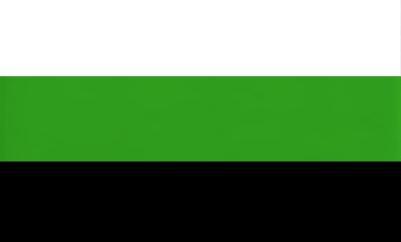 Neutrois Pride ( White, green, and black horizontal lines - Neutrois [genderless, agender, neutral gender, etc]. The white stripe stands for neutral, unidentified, or questioning gender. The green stripe represents non-binary gender. The blackness stripe represents agender, asexuality, or third-gender.)
 Aromantic Pride ( Green, xanthous, orangish, and black - Aromantic. Created bycameronwhimsey. "We designed the flag to be as inclusive as possible and we used fairly basic color symbolism. Green, (beingness the opposite, complimentary colour to ruby, which commonly represents romance), represents aromanticism. Yellowish, like the yellow rose which represents friendship, stands for various forms of queerplatonic love. Orange, existence red in one case removed toward yellowish, represents lithromantics. And blackness represents romantics who choose to reject traditional romance." This is the original proposed aromantic flag, merely others be because this flag has similar colors to the Jamaican and Rastafarian flags.)
 Akoiromantic Pride ( V horizontal stripes, from elevation to bottom: red, orange, xanthous, white, and black - Akoiromantic / Lithromantic / Apromantic Pride. Created bythejasmineelf as a lithromantic pride flag. "Cherry represents community, as it is traditionally a colour of leadership, life, and sensitivity. Orange represents lith-ness, as information technology does on a version of the aro flag. Yellowish represents our varied relationships, also as it does on on the mentioned aro flag. Xanthous traditionally represents friendship, loyalty, and accolade. White represents romanticism and sexuality. Black represents aromanticism and asexuality."
  Polyamory Pride Flag - ( Blue, cherry-red, and black with a aureate lowercase pi from the Greek alphabet . Polyamory. Blue represents openness and honesty between all lovers involved in each relationship. Red represents love and passion. Blackness represents all people in open and consensual relationships who take to hide their relationships due to social discrimination. The gold pi represents the value placed on emotional attachments to others.)
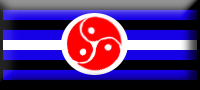 BDSM Pride ( Black stripe, blueish stripe, blackness stripe, blue stripe, white stripe, blue stripe, blackness stripe, blue stripe, black stripe, and the Quagmyr's BDSM keepsake in cerise and white in the middle - BDSM subculture [Bondage and Discipline, Sadomasochism, and Domination and Submission]. Based on the Leather flag combined with Quagmyr's BDSM emblem.)
 Lipstick Lesbian Pride (Stripes of different shades of ruby, purple, and pink with a white stripe in the middle besides as a lipstick print in the upper left corner. - Lipstick / Femme / Feminine Lesbians and other feminine female identified people who are attracted to female identified people. The shades of red, royal, and pink represents traditionally female person associated colors. Though popular and well-known, this flag is controversial considering its creator has said racist, biphobic, and other ignorant and intolerant things in her web log.)
 Butch Lesbian Pride (Seven horizontal stripes that are all shades of blue except the center white stripe - Butch lesbian pride, sometimes butch pride for masculine women who are interested in women but not lesbians. Information technology was created bydorian--rutherford.tumblr.com/, but I do non know for certain what the colors were supposed to hateful. Still, my guess is that blue probably represents masculinity and white represents gender.)
 Gay Man Pride / Gay Male Pride (Seven horizontal stripes, from elevation to bottom: dark teal, teal, lite teal, white, light blue, bluish, dark blue - Gay man and gay male person pride. It is a proposed flag created by Bearding and Modernistic Hermy on tumblr considering there are many well-known lesbian pride flags out there but very few gay male pride flags. Co-ordinate to this page on tumblr: "anonymous wanted blues and purples, but it looked besides much like the butch lesbian flag so Hermy suggested using greens instead. Color meanings: Based on the pink lesbian flag [Link].")
 Twink Pride ( Three horizontal stripes ... from top to bottom: pink, white, and pale yellow with conjoined male symbols - Twinks . I take non been able to find the true meaning of this flag online, so I will only make an educated guess based loosely on meanings of the aforementioned colors in other flags. Pinkish might might represent effeminacy or femininity because twinks are often described as very "femme" due to their youth, minimal trunk hair, and slimness. Information technology may also correspond gay men in general. White might correspond sexuality. Stake yellowish might correspond youth and happiness. The two intertwined male symbols represents gay men or all males who are attracted to other males."
 Boi Pride ( from correct to left, top to lesser, diagonal stripes at a 45 caste angle Green stripe, black stripe, green stripe, black stripe, white stripe, black stripe, greenish stripe, blackness stripe, green stripe, and a ruby centre in the upper right corner - Boi or male child, with boi sometimes associated with butch lesbian or young gay man. Based on the Leather pride flag, the diagonal tilt represents the elevated status of the Sir over the submissive condition of the boi or male child. The red heart is in the correct corner to symbolize where a boi/boy's heart is, and the dark-green colour represents a adolescent color, possibly denoting the "light-green" or inexperienced fellow.)
 The International Bear Brotherhood Pride Flag ( Dark-brown, orange, yellow, low-cal biscuit, white, grey, and black with a carry paw print in black in the upper left corner - Bears [hairy gay men]. The colors represent the various pare tones and natural hair colors equally a sign of equality and unity. In add-on, hair color has a connectedness to the torso hair of cocky-identified bears.)
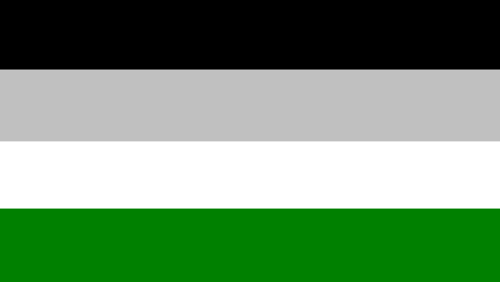 Androphilia Pride ( Black, greyness, white, and green - Androphilia and androsexuality. The significant of each colour in the flag is unknown for certain, simply information technology is possible to make an educated guess based on other pride flags. Blackness could correspond gender neutrality or rejection of the straight-gay binary and the female-male binary. Greyness might correspond the greyness expanse between genders, reflecting that many gender not-conforming people place every bit androphilic. White may represent equality, intersexuality, transitioning or neutral gender, or the idea that attraction to males does not equate to femininity. Green might symbolize masculinity or allure to males.)
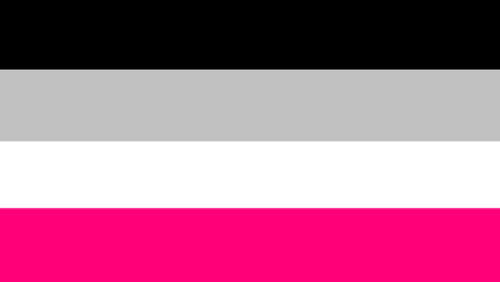 Gynephilia Pride ( Black, grey, white, and pinkish - Gynephilia, gynosexual, gynesexual. The flag is not an official flag, merely a proposed ane. It appears to be based on the Androphilia Pride Flag. It is uncertain what each color stands for, merely based on the Androphilia Pride Flag and other flags, this is my educated gauge. Blackness could stand for gender neutrality or rejection of the straight-gay binary and the female-male binary. Gray might stand up for the gray area between genders, reflecting that many gender non-conforming people identify as gynephilic. White may stand for equality, intersexuality, transitioning or neutral gender, or the idea that allure to females does not necessarily a result of masculinity or femininity. And pink is probably a tribute to allure to all female person identified people.)
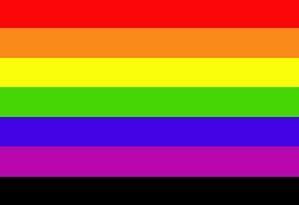 Victory Over AIDS flag - ( Red, orange, yellow, light-green, blue, regal, and black stripes . Fabricated for AIDS victims and those who support them. Clearly based on the Gay Pride rainbow flag. Although it is based on the Gay Pride flag, it most probable does not just correspond AIDS in the male person gay community. A person of whatever sexual orientation or gender identity tin contract HIV or AIDS. The extra black stripe probably represents death, but it is possible that it represents triumph over darkness).
 Marriage Equality ( A red background with a pinkish equals sign - For all those who back up the right of people to marry whomever they choose, regardless of sexual orientation or gender identity. It is usually representative of the battle for same-sex marriage in the United States but can also correspond equal marital rights internationally. The flag was originally a blue background with a yellow equals sign. It was created by the Human Rights Campaign, an organization that fights for LGBT rights. It became increasingly popular at the same fourth dimension that the demand for equal marital rights sparked the nation, then the organization changed it to ruby and pink to correspond dearest, passion, equality, and the queer customs.)
 Ally Pride ( Inverted Five-shaped Rainbow triangle against black and white stripes - Allies, who ordinarily identify as straight and cisgender, supporting the LGBT community, though it can besides include people of all sexual orientations and gender identities. The inverted rainbow V represents the A in Activism while the black stripes stand for heterosexuality.)
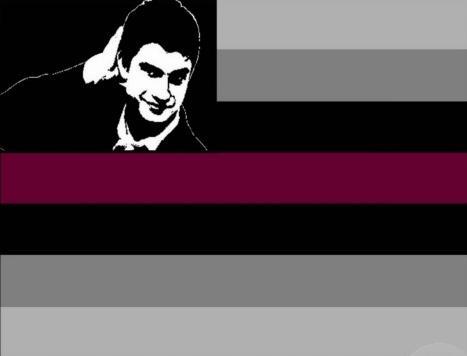 Metrosexual Pride ( Light greyness stripe, night gray stripe, black stripe, purple stripe, black stripe, nighttime grayness stripe, low-cal gray stripe with a movie of a metrosexual human being in the upper left corner [the human might be Mark Thaler, creator of the flag] - Metrosexual. It is unclear what each color means. The creator Mark Thaler sells memorabilia with this flag on it.)
 Heterosexual Pride ( Black and white stripes - Heterosexual, usually cisgender, people. The black and white stripes represent allure to the opposite sexual practice. The term "heterosexual" was coined in the mid-19th century by an Austro-Hungarian journalist named Károly Mária Kertbeny. This is a very controversial flag because unlike the Ally Pride flag, which represents straight people and others who specifically support the LGBT community, the heterosexual flag is non necessarily an ally flag. Some heterosexual-identified people apply the flag every bit a homophobic reaction to LGBT pride. Others may use the flag every bit an indicator of their sexual orientation, merely even that motivation is very questionable to the idea of equality in the face of privilege. All the same, it is possible to be heterosexual and trans* or non-binary, then sometimes people use this to represent pride while still being part of the LGBT community.)
 Cisgender Pride ( Three horizontal stripes, from top to lesser: Grey, Light Grey, and Grayness. Cisgender. I do not know who created this flag or what the colors originally meant, only my estimate is that Grayness might represent and then-called "normalcy" [even though cisgender people are not somehow more than normal than anyone else] and Lite Grey might stand for gender in general).
Source: https://www.deviantart.com/savvyred/journal/Pride-Flags-Colors-explained-379547414
0 Response to "Black and White Stripe and Blue Baby Shower"
Post a Comment